
PGT Genetic Testing in Surrogacy: Pros & Cons 2026
PGT Genetic Testing in Surrogacy: Pros & Cons 2026
Written from our team’s experience discussing embryo testing decisions with intended parents since 2019. Testing is a clinical judgement that depends on your age, diagnosis and history — this is background for a conversation with your embryologist, not a recommendation.
When a journey costs as much as surrogacy does, the temptation to test every embryo before transfer is strong. Preimplantation genetic testing promises to reduce the chance of failure, miscarriage and affected pregnancy, and in the right circumstances it delivers on that promise. In others it costs money, consumes embryos, and produces answers that are genuinely difficult to interpret. Deciding whether to test is a real decision with real trade-offs, and it should be made on your own numbers.
What PGT Actually Tests
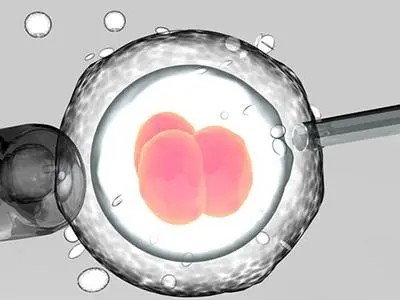
Preimplantation genetic testing involves removing a few cells from the outer layer of a blastocyst — the trophectoderm, which goes on to form the placenta rather than the baby — and analysing their DNA. The embryo is frozen while the analysis is performed, and a transfer happens in a later cycle. That freeze is not incidental: it changes the shape of the journey, because it separates embryo creation from embryo transfer by weeks.
An important limitation follows directly from the method. The cells tested come from tissue that becomes the placenta, not the fetus. In the overwhelming majority of cases the result reflects the embryo accurately. In a minority it does not, because the placenta and the baby can differ genetically. This is not a failure of the laboratory; it is biology.
The Three Types
PGT-A screens for the number of chromosomes, identifying embryos with extra or missing chromosomes that are unlikely to implant or likely to miscarry. This is the test most intended parents mean when they say PGT, and it is the one whose value depends heavily on age.
PGT-M looks for a specific known single-gene condition where one or both parents are carriers — conditions such as cystic fibrosis, sickle cell disease or a condition already present in the family. Where there is a known risk, this test is not really optional in the way PGT-A is; it answers a defined question with a defined answer.
PGT-SR is used where a parent carries a chromosomal rearrangement such as a balanced translocation, which can produce embryos with unbalanced genetic material and recurrent loss. In that specific situation testing addresses the actual cause of the problem rather than a general statistical improvement.
The Case For Testing in Surrogacy
Surrogacy changes the calculation compared with standard IVF in one important way: each transfer is more expensive and more logistically complex. There is a cycle of medication and monitoring for the surrogate, coordination between clinic and intended parents, and often travel. Reducing the number of transfers needed has a financial value that does not exist in the same form for someone doing IVF on themselves.
There is also a human argument. Miscarriage in a surrogacy arrangement is not only a loss for the intended parents; it is a physical and emotional event for the woman carrying. Where testing materially reduces the chance of a pregnancy loss, that matters to everyone involved, and it is a legitimate part of the conversation with your surrogate.
The Case Against
The strongest argument against PGT-A is that it works by excluding embryos, and some of the embryos it excludes would have resulted in a healthy baby. Embryos labelled abnormal are generally not transferred, and while many would indeed have failed, laboratory and clinical experience indicates that a proportion of them self-correct or were misclassified by the biopsy.
The second argument is that for younger patients with a good prognosis, the improvement in outcome per transfer is modest, and the cost of testing plus the additional frozen transfer cycle can exceed the cost of the transfers it avoids. If you have few embryos, spending them on a test that may exclude several is a decision with genuine downside.
Mosaicism and the Grey Zone
Some embryos return a mosaic result: some cells tested normal and some abnormal. These are neither clearly usable nor clearly unusable, and they are one of the most difficult things intended parents are asked to weigh. Clinics differ markedly in how they handle mosaic embryos, in what they will transfer, and in the counselling they provide around them.
Before you commit to testing, ask your clinic what it does with mosaic results. If the answer is that they are not transferred, you should understand that you may end up with fewer transferable embryos than you started with. If the clinic will transfer some categories of mosaic embryo, ask which categories and on what evidence.
Cost, Turnaround and Logistics
Testing adds a per-embryo fee plus a biopsy charge, and it requires the embryos to be frozen and stored while results are returned. Turnaround is usually a matter of a couple of weeks. In a surrogacy journey this rarely delays things meaningfully, because the surrogate’s cycle has to be prepared in any case.
The cost should be compared not against zero but against the cost of a transfer. If a transfer cycle costs a substantial amount and testing plausibly removes the need for one, the arithmetic may favour testing. If you have one or two embryos and a good prognosis, the arithmetic may not. Published cycle data from the Centers for Disease Control and Prevention gives a realistic baseline for implantation rates by age, and professional guidance on embryo testing is available from the American Society for Reproductive Medicine.

Who Benefits Most
Testing tends to be most valuable where the prior probability of chromosomal abnormality is high: intended mothers of advanced maternal age, a history of recurrent miscarriage, previous failed transfers, or a known genetic condition or chromosomal rearrangement in one of the parents. In those situations the test is answering a question with a real chance of being abnormal.
It tends to be least valuable where the prognosis is already good and the embryo number is low. A younger intended mother with three good-quality embryos from her own eggs may do as well without testing, and keeps all three embryos in play. This is a conversation to have with your embryologist using your own numbers rather than a general rule applied to everyone.
How to Decide
Ask for your clinic’s own data, not national averages: implantation rate per transfer by age group, and miscarriage rate with and without testing. Ask how many embryos they expect to biopsy and what proportion typically come back usable. Ask what happens to embryos that test abnormal, and what happens to mosaic embryos.
Then decide with your surrogate and your clinic together. Because testing changes the timing of the transfer and the number of cycles involved, it is a decision that affects her as well. Programmes that handle this well discuss it explicitly before the retrieval rather than presenting it as a technical default.
Testing and the Number of Embryos You Have
The value of testing is inseparable from the number of embryos available. Testing ten embryos and transferring the best two is a very different proposition from testing three and being told one is usable. Where a cycle is expected to produce many embryos, testing functions as a ranking tool: it tells you which to transfer first, and the cost of excluding the rest is low because you have plenty.
Where a cycle is expected to produce only two or three, testing stops being a ranking tool and becomes a filter, and a filter applied to a small set removes options. Intended mothers with diminished ovarian reserve are the group most often poorly served by a default testing policy, and it is worth saying so explicitly to your clinic before the retrieval rather than after the results.
What Testing Cannot Tell You
Testing addresses chromosome number and specific known conditions. It says nothing about the large majority of conditions that are not caused by an extra or missing chromosome, nothing about most single-gene conditions unless there is a specific reason to look for them, and nothing about the many influences on pregnancy and development that are not genetic at all. A euploid embryo is not a guarantee; it is a better starting point.
Intended parents occasionally discover after testing that they expected more certainty than the test was ever able to provide. That is worth addressing before you pay for it. The honest framing is that testing improves the odds per transfer and reduces the chance of certain specific outcomes — it does not deliver a screened pregnancy in the sense most people imagine when they first hear the word tested.
Frequently Asked Questions
Does PGT guarantee a healthy baby?
No. It reduces certain risks, chiefly chromosomal number abnormalities and specific known conditions. It does not screen for every genetic condition, and it cannot detect problems that arise later in pregnancy or from non-genetic causes.
Does testing damage the embryo?
Biopsy is routine and performed at the blastocyst stage by experienced embryologists, and most embryos survive it well. It does require freezing and a later transfer cycle rather than a fresh transfer.
Is PGT worth it when each transfer is so expensive?
Often yes, because each surrogacy transfer carries higher cost and coordination than a standard IVF transfer. Whether it pays depends on your age, embryo number and the clinic’s own outcome data.
What happens to embryos that test abnormal?
Policy varies by clinic and jurisdiction. Ask before you test, because the answer determines whether testing reduces your usable embryo count.
Should we test if we only have two embryos?
It depends on prognosis and your tolerance for losing both to an abnormal result. This is precisely the case where clinic-specific data matters more than general guidance.