Embryo Donation and Surrogacy: Building a Family With Donated Embryos
Embryo Donation and Surrogacy: Building a Family With Donated Embryos
Written from journeys we have followed since 2019, including families using donated embryos with a carrier and families donating their own. Medical and legal details vary by clinic and jurisdiction throughout.
Two forms of assistance intersect here, and families often arrive having thought carefully about one and barely at all about the other. Donated embryos solve the problem of not having viable gametes. A gestational carrier solves the problem of not being able to carry. Using both means accepting two sets of complexities at once.
The combination is increasingly common and often works well. What it requires is clarity early, because decisions made about donor selection constrain what happens later, and reversing them once a cycle is underway is expensive in every sense.
What Donated Embryos Actually Are
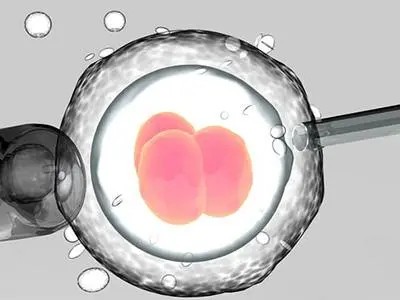
Most donated embryos are surplus from another family’s fertility treatment — created during IVF, not all used, and stored. Rather than being discarded or kept indefinitely in storage, they are donated for another family to use. Some donors choose anonymous donation; others choose an open arrangement with defined contact.
The second category is embryos created specifically for donation, sometimes using donor eggs and donor sperm together. These typically accompany more thorough screening and clearer documentation, and usually carry higher cost. Both routes are legitimate, and they differ mainly in how much you will know and how much certainty you can obtain.
Why Families Choose This Route
The reasons are usually cumulative. Both intended parents may lack viable gametes. One may carry a heritable condition that precludes using their own. Previous IVF with own gametes may have failed repeatedly. Or the arithmetic may simply favour it, since donor embryo cycles cost a fraction of a fresh egg donor cycle.
Cost deserves honest mention because it drives many decisions quietly. Using donated embryos avoids egg donor compensation, recruitment, and a retrieval cycle, which together account for a large share of what a fresh donor cycle costs. For families financing their own journey, that difference frequently determines what is possible at all.
Screening and What Is Actually Verified
Embryos created for fertility treatment were already produced under medical screening of the gamete providers, and donation adds further requirements on top. Donors are typically screened for infectious disease and a defined panel of genetic conditions, with questionnaires covering family history across several generations.
What screening cannot do is eliminate risk. A panel tests for known variants, not everything; family history relies on accurate reporting; and the common chromosomal abnormalities that cause most early loss relate to the embryo rather than the providers and are not predictable at all. Understanding the limit matters as much as knowing the testing. Background on genetic screening concepts is available from the National Institute of Child Health and Human Development.
Anonymous, Open, or Something Between
Donation arrangements sit on a spectrum. Anonymous donation historically dominated, though direct-to-consumer DNA testing has made the concept increasingly unstable in practice. Open donation, where identity is known from the outset, is growing. Between them sit arrangements where contact is possible but controlled.
Whichever you choose, the child’s perspective deserves weight from the beginning rather than later. A donor-conceived person who discovers the circumstances accidentally, in adulthood, through a DNA database — often alongside discovering unknown siblings — has had something done to them rather than with them. That outcome is avoidable, and it is avoidable cheaply.

The Legal Transfer
Before embryos can be used, ownership must transfer from the donating family to yours, and it is done through a legal agreement executed by both sides. This document matters more than families expect, because it settles questions nobody wants to reconsider later: any future claim to the embryos, what happens to unused ones, and what contact is permitted.
The agreement must also be compatible with your surrogacy arrangement, since the clinic will need both before it proceeds. Where a carrier is involved, questions of parentage and who is named at registration are resolved alongside rather than after. Get both sets of lawyers talking early, since these documents do not exist in isolation.
Choosing Among Available Embryos
Matching for donated embryos is less standardised than egg donor matching. Availability is intermittent, waiting lists are common, and the pool in any given programme may be small. Some operate on a matches-to-family basis; others allow selection from profiles that vary considerably in how much information they carry.
Families should decide beforehand what they genuinely need to know. Characteristics of the donors, medical history detail, how many embryos are available, whether those embryos have been thawed and biopsied, and what testing results exist. Being explicit about your minimum saves months spent considering profiles you were never going to accept.
Realistic Expectations
Donated embryos very often come from cycles that produced mixed-quality embryos, and these were frequently surplus precisely because they were not the highest graded. Many have been frozen for years, and some were biopsied and thawed before you encountered them, which affects viability.
Set expectations against that honestly. Success per transfer using donated embryos is respectable and in many programmes good, but it is not uniformly excellent, and the embryos’ provenance varies more than any other pathway. Ask your clinic for outcome data specific to donated embryos rather than general IVF figures. National outcome data is published by the Centers for Disease Control and Prevention.
Where Donated Embryos Come From
Three channels account for most placements. Fertility clinics run their own donation programmes from patients who completed treatment and elected to donate. Independent embryo donation agencies match donors and recipients directly with clinic involvement for the medical side. And some families arrange known donation privately, frequently through someone they already know.
Each has different characteristics worth weighing. Clinic programmes are well-regulated but may have small pools and long waits. Agencies offer broader selection with variable standards and higher coordination fees. Known donation offers maximum information and maximum relational complexity, which some families find ideal and others find unmanageable. Choose the channel deliberately rather than defaulting to whichever you found first.
What It Costs
Using donated embryos is substantially less expensive than a fresh egg donor cycle, and the reason is structural: no donor recruitment, no compensation for an egg donor, no retrieval cycle, none of the medication and monitoring that retrieval requires. Those components represent the largest single block of cost in a donor-egg journey.
What remains is the donation programme fee, which varies considerably by channel, plus embryo storage and transport, thawing, testing where it is performed, preparation of the carrier and the transfer itself. Transport of frozen embryos between clinics is a routine cost that surprises people, as is long-term storage if you are holding embryos at one clinic and transferring at another.
What Happens to Unused Embryos
Embryos are typically transferred in a batch rather than individually, and families using a donated cohort may receive several at once. What happens to those not used is a decision the donation agreement should settle clearly, and the options are narrower than people expect: continued storage at your cost, donation onward to another family, donation to research, or thawing without transfer.
Storage costs accumulate quietly and indefinitely, and families frequently pay for years without revisiting the decision. Where the agreement permits onward donation, note that it may constrain who can receive them. Where it permits research, understand what that involves. Deciding this while you are still in treatment is considerably easier than deciding it later.
Ethical and Religious Considerations
Embryo donation raises questions that egg or sperm donation do not, because an embryo is a distinct entity rather than a gamete, and some traditions and consciences treat that distinction as decisive. Families with strong views in either direction should address them before embryos are selected rather than during a cycle.
These questions are not obstacles to be cleared but decisions to be made deliberately, and there are serious positions on multiple sides. Where both partners hold different views, a counsellor experienced in third-party reproduction is genuinely useful; this is one of the areas where professional guidance reliably improves the outcome for everyone involved.
Frequently Asked Questions
Are donated embryos safe to use?
Yes, within the limits of available screening. Donors are screened for infectious disease and defined genetic panels, and embryos must meet regulatory requirements before transfer. What screening cannot eliminate is the risk present in any pregnancy, so ask your clinic what specifically was tested.
How long is the wait?
It depends heavily on how specific your requirements are. Programmes with broad matching sometimes place embryos in weeks; where you need particular donor characteristics or an open arrangement, waits extend substantially. Ask for realistic estimates rather than best cases.
Can the donors change their minds?
A properly executed donation agreement transfers rights before embryos are used, and reversal after transfer is generally not available. Both sides should have independent legal advice so the agreement holds. This is why clinics require executed documents before they will proceed.
Will the child be genetically related to either intended parent?
Usually not, though sometimes one parent’s gamete was used with a donor of the other. Where neither contributed, neither has a genetic link, and the gestational carrier certainly does not. Discuss how you will talk about this with your child well before birth.
Can we use a surrogate and donated embryos together?
Yes, and the combination is common. It requires coordination between the embryo donation agreement, your surrogacy agreement and clinic requirements, plus clarity in advance about parentage and who is named at registration.