Embryo Adoption Versus Surrogacy: Choosing the Route That Fits
Embryo Adoption Versus Surrogacy:Choosing the Route That Fits
Written from how embryo donation programmes and surrogacy arrangements are structured differently, and from the practical and emotional trade-offs each one carries. The two routes are not cheaper or faster versions of one another. They solve different problems, and the deciding factor is almost never cost.
Embryo donation and surrogacy are frequently presented as alternatives on a single axis of price. That framing hides the real difference. One route avoids a pregnancy entirely; the other involves one. That single distinction reorganises everything else about the decision, including the timeline, the comorbidity of risk, and what the experience is like day to day.
Neither route is better. They suit different clinical situations and different tolerances, and the useful work is working out which one fits before either is priced.
What Embryo Donation Actually Involves
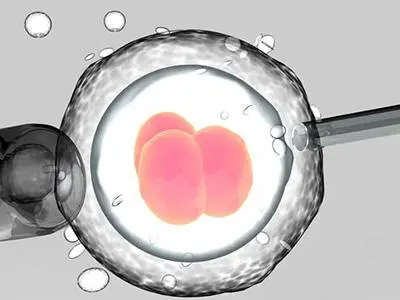
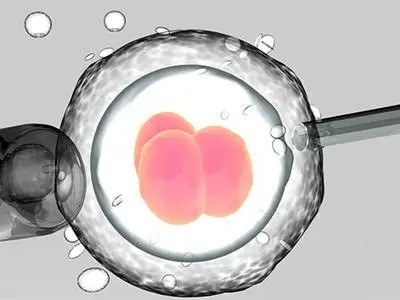
An embryo donation programme receives embryos that were created by a third party: typically a couple or individual who underwent treatment, produced embryos, and subsequently could not or chose not to use them. Those embryos are screened, thawed and transferred to a recipient.
The recipient carries the pregnancy herself. There is no carrier, no compensation question, and no pregnancy-related transfer of parental status because the recipient is the birth mother and the legal parent from the start.
The clinical entry point is therefore very different. Instead of preparing a recipient for stimulation and egg collection, the pathways are embryo screening, uterine preparation and transfer. It is a shorter clinical track in some respects and a longer one in others.
What Surrogacy Involves
A surrogacy arrangement involves a carrier who carries the pregnancy on behalf of the intended parents. It becomes available when the intended parent cannot carry a pregnancy herself, whether for a clinical reason, a medical risk, or a personal one.
The clinical entry point is a full cycle: screening, cycle preparation, embryo transfer, and surveillance through to the second trimester. The legal work is substantially greater, because parental status has to pass from carrier to intended parents at some defined point.
For an overview of how assisted reproduction is assessed and reported, patient-facing material is published by the American Society for Reproductive Medicine.
The Clinical Comparison
Embryo donation avoids two of the hardest parts of treatment: egg collection for the recipient and the early pregnancy loss that follows a poor quality embryo transfer. What it does not avoid is everything after transfer, because the recipient carries the pregnancy herself.
Surrogacy moves the pregnancy-related risk to a carrier and keeps it off the intended parent. That is the entire point and it is a genuine advantage where carrying is medically unsafe or impossible.

Neither route improves embryo quality. Where embryo quality is the limiting factor, the same donor embryos that would be used in one route are available for the other; the difference is who carries the resulting pregnancy.
The Legal Comparison
Embryo donation is legally relatively simple in most jurisdictions because the recipient becomes the parent at birth and no third party holds parental status. There are consent documents to complete, and the donors’ rights are settled in advance, but the chain is short.
Surrogacy carries a legal load that embryo donation does not. Parental status passes from one party to another, which means a legal framework may be required, a carrier’s consent must be documented at defined moments, and the home country may need to recognise what the destination country recorded.
That legal work is real money and real time, and it is the largest structural difference between the two routes. It is also the reason that an arrangement that looks cheaper abroad often is not. Patient-facing guidance on the clinical side is available from the American College of Obstetricians and Gynecologists.
The Waiting List Problem
This is the factor most often missing from comparisons. Embryo donation programmes typically have a waiting list, sometimes a long one, because the supply of embryos is limited by what donors choose to leave with the programme.
Surrogacy arrangements do not have this constraint in the same way, because they are assembled rather than matched. The trade-off is a different kind of wait: screening and matching a carrier takes time of its own.
Comparing the two routes on calendar time without asking about both waiting periods produces a misleading answer in either direction.
Who Each Route Suits
Embryo donation suits people who can carry a pregnancy but want someone else’s embryo, or who cannot use their own embryos and want a route that does not require a third party to be pregnant on their behalf. It also suits those who want the legal position to stay simple.
Surrogacy suits those who cannot carry a pregnancy for medical or personal reasons, and those for whom a third party being pregnant is the acceptable arrangement rather than the unacceptable one.
Both routes are open to intended parents with no genetic connection to the child. That is a separate question from which route, and it is worth being clear about it early.
The Financial Comparison
Embryo donation usually has a lower headline cost, because it removes compensation, carrier screening and the longer clinical track. That saving is partly offset by the waiting list and partly by programme fees that vary widely.
Surrogacy carries compensation, carrier screening, legal drafting and the home-country filing costs on top of the clinical work. None of those are optional in a compliant arrangement, and cutting any of them is how arrangements fail.
Counselling and the Question of Openness
Both routes raise the same long-term question about how much to tell a child later, and both are answered similarly. What differs is the shape of the family story, because one route involves a third party carrying a pregnancy and the other does not.
This is not a reason to choose a route, but it is a reason to think about it before starting. Parents who have thought about the conversation early tend to handle it better than those who have not.
How Embryo donation screening Works
Donated embryos are screened before transfer in the same way as any embryo intended for use. Documentation of the donor history travels with the embryos, and recipients should read that documentation carefully rather than accepting it as a formality.
Screening does not eliminate the embryo quality question, because some donated embryos arrive with known limitations. Where quality is the limiting factor, this is a clinical conversation with the programme rather than a matter of route selection.
Programme fees and what they exclude
Programme fees for donated embryo programmes vary widely and are frequently quoted without screening, medication, thawing and the transfer itself. A quotation that looks cheap is often a deposit rather than a total.
The same test applies to a surrogacy quotation. Ask for exclusions in writing, because a comparison between two quotations that cover different scopes is not a comparison at all.
Embryo Thawing and Timing
Donated embryos are frozen, and the transfer cannot be scheduled until a thawed embryo is available and a receptive uterine lining has been prepared. Those two requirements have to line up, and they do not always line up quickly.
This is a scheduling constraint rather than a difficulty, but it is the reason a programme’s stated wait for an embryo donation can differ from its stated wait for a surrogacy cycle. Ask which constraint is currently binding.
Cost Per Live Birth Versus Cost Per Cycle
The figures quoted for either route are usually cost per cycle or per attempt, which is not the same as cost per child. Implantation and take-home rates differ enough between routes that the two figures can mislead badly.
Ask both programmes for take-home figures for a comparable group rather than a headline rate, and then compare those. It is the only comparison that corresponds to the outcome you are actually paying for.
Frequently Asked Questions
Which route is faster?
It depends which wait you measure. Embryo donation has a supply-side waiting list; surrogacy has a screening and matching timeline. Ask both programmes for actual current waits rather than averages before deciding.
Is embryo donation cheaper?
Usually yes on headline cost, because carrier compensation and the extended legal track are absent. Programme fees and waiting-list time are not captured in a headline figure, so ask for a full written schedule from both.
Can a donor embryo be used with a surrogate?
It can in some arrangements, and the combination is legitimate when the clinical situation calls for it. Whether it is available depends on the programmes involved and on the legal framework where the carrier lives.
Which route involves less legal work?
Embryo donation, generally, because the recipient is the birth parent and no parental transfer is needed. Consent documentation and donor rights have to be settled, but the chain is far shorter.
Does either route guarantee a genetic link?
No. Both can involve embryos with no genetic connection to the intended parent if that is the situation, and both can involve one if it is. Genetic connection is a separate choice from route selection and should be decided on its own terms.