
IVF Process Step by Step: What Every Stage Actually Involves in 2026
IVF Process Step by Step: What Every Stage Actually Involves in 2026
Drawn from what we have walked families through since 2019, across clinics in several countries. This is a practical map of the stages, not medical advice — your clinic’s protocol will differ in detail, and those details belong with your care team.
In vitro fertilization is the procedure most people mean when they say “IVF,” but the phrase hides a sequence of distinct steps that each carry their own timeline, cost, and emotional weight. Understanding the order before you start changes how you read your clinic’s updates and how you plan your life around them. The outline below follows the path most clinics use, with the variations that matter flagged along the way.
Before Anything: Consultation and Testing
The first stage is not a procedure at all. It is a workup. Both partners — or the egg provider and the gestational carrier, depending on your configuration — undergo hormone panels, infectious disease screening, a semen analysis, and often an ultrasound-based assessment of ovarian reserve. The point is to establish a baseline that determines the protocol, not to clear a bar. Results here shape nearly every decision after them, so arriving with prior records avoids repeating tests you have already paid for.
This is also where the financial conversation should happen in full. Ask for the complete fee schedule, what is included, what is billed per event, and what medications cost separately. Clinics vary enormously in how transparent they are at this point, and the families who fare best are the ones who treat the consultation as a negotiation of understanding rather than a formality.
Ovarian Stimulation
For an IVF cycle using the intended mother’s or a donor‘s eggs, the next phase is stimulating the ovaries to produce several eggs at once rather than the single egg a natural month would yield. This involves daily injectable hormones over roughly eight to fourteen days, with monitoring scans to track follicle growth. The medication regimen is adjusted in response to how the ovaries respond, which is why the schedule is never fixed in advance.
The monitoring intensity surprises people. You may be in the clinic every other day for blood draws and ultrasounds during this window. It is disruptive but necessary: over-stimulating risks a complication called ovarian hyperstimulation syndrome, and under-stimulating wastes a cycle. The balance is held by the monitoring, not by the original prescription.

Egg Retrieval
When follicles reach the right size, a trigger injection is given and retrieval is scheduled about thirty-six hours later. The retrieval itself is a short procedure under sedation, where a needle guided by ultrasound collects the eggs from the follicles. It takes minutes. What people remember is the recovery and the wait — the eggs are taken to the laboratory immediately, and you will not know how many were mature until the embryology report comes back.
Retrieval is also the point at which the man’s sperm sample is collected, or a thawed donor sample is prepared. The two are brought together in the next stage regardless of whose they are, which is one of the reasons IVF accommodates so many family configurations.
Fertilization and Embryo Culture
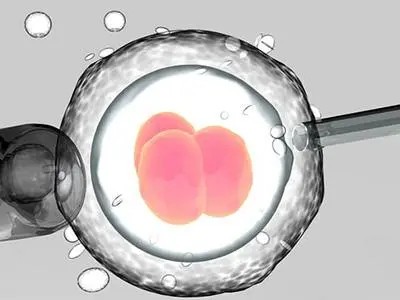
In the lab, eggs are fertilized either by placing sperm with each egg or by injecting a single sperm directly into the egg, a method called ICSI used where motility or count is a concern. The fertilized eggs are then cultured for several days. Most clinics grow them to the blastocyst stage around day five, because embryos that reach that point have a higher chance of implanting.
Not every fertilized egg makes it. Some arrest. This attrition is normal and rarely predicted by the appearance of the starting eggs. Families should hear this clearly beforehand, because the gap between eggs retrieved and embryos available for transfer is where disappointment most often lands.
Preimplantation Genetic Testing
Many clinics offer testing embryos for chromosomal normalcy before transfer, particularly where maternal age is higher. The tested embryos are biopsied and frozen while results return, which means a transfer does not happen in the same cycle. Whether to test is a genuine decision with trade-offs, and clinics present it differently, so the question deserves its own discussion with your team rather than a default.
Embryo Transfer
The transfer is brief and usually painless: a thin catheter places the selected embryo into the uterus. A full bladder helps visualization. Many clinics transfer a single embryo by default now, because twin pregnancy carries sharply higher risks for both carrier and babies, and cumulative success with sequential single transfers compares favorably. The number transferred is a decision worth being deliberate about, not a lever to pull for speed.
The Luteal Phase and the Wait
After transfer, progesterone support continues to prepare the lining, and roughly nine to eleven days later a blood test measures hCG to confirm pregnancy. This wait is short and uniquely stressful, because almost nothing is actionable in it. Clinics differ on whether to test at home first; the blood test is the result that counts.
Cryopreservation and the Bigger Picture
Any embryos not transferred are frozen, and that reserve is what makes a single retrieval usable across multiple attempts. For many families this is the most consequential feature of IVF — one stimulation cycle can support several chances. National outcome data, reported by the Centers for Disease Control and Prevention, gives a reference point for what success rates by age and diagnosis actually look like, once you read them against your own situation.
What One Cycle Costs
A single fresh cycle typically bundles monitoring, retrieval, fertilization, and one transfer, but excludes medications, which are billed separately and can be a large share of the total. Frozen transfers, additional monitoring, and any genetic testing add further. The arithmetic varies by country and clinic so widely that a quoted “IVF price” is almost always incomplete until you see the itemized schedule. Ask for it before stimulation begins.
Choosing Where to Be Treated
Clinic selection is a decision families under-weight. Laboratory accreditation, the clinic’s live-birth rate by your age band rather than a generic figure, its embryo transfer default, and how it communicates during the wait all predict experience more than reputation does. A plain-language overview of the procedure is published by the Mayo Clinic, and infertility evaluation background is maintained by the National Institute of Child Health and Human Development.
When IVF Is Recommended
IVF is not the first step for most people; it is usually considered after a period of trying, or immediately where a specific barrier exists. Blocked fallopian tubes, severe male-factor infertility, certain genetic conditions, and unexplained infertility after a defined interval are the classic indications. The threshold for moving to IVF sooner rather than later is lower after thirty-five, because the cost of another waiting period is higher. What matters is that the decision is made on a diagnosis rather than on anxiety alone — the testing stage exists precisely to establish which of these applies to you, and that answer should drive the timeline rather than a vague sense that time is passing.
For some, a less invasive step such as medicated cycles or intrauterine insemination is tried first; for others with clear indications, those steps only delay the treatment that will be needed anyway. Discussing the full sequence with your clinician at the consultation, rather than discovering it sequentially, lets you plan the months ahead instead of reacting to them. The goal is to avoid both rushing into IVF unnecessarily and lingering on steps that will not resolve your specific situation. A diagnosis-led plan is almost always shorter and less expensive than an anxiety-led one.
Staying Organized Through the Process
A practical note that families under-weight: the IVF process generates more paperwork and appointments than it first appears, and the people who move through it smoothly are those who track it deliberately. A single folder for results, a calendar for the stimulation and monitoring window, and a list of who to call at each stage reduce the cognitive load at exactly the moments it is highest. The process is demanding enough without losing a result or missing a monitoring appointment, and those small losses compound into delays. Organization is not glamorous, but it is one of the few things fully within your control in a process where most things are not, and the families who treat it as part of the plan fare noticeably better than those who leave it to chance.
Frequently Asked Questions
How long does one IVF cycle take?
From stimulation start to pregnancy test is usually about four to six weeks, but the preparation beforehand and any frozen transfer afterwards extend the real timeline to months. A failed fresh transfer using cryopreserved embryos can be reattempted on a separate schedule.
Is the retrieval painful?
It is done under sedation, so the procedure itself is not felt. Discomfort afterward is typically mild cramping and bloating for a day or two. The medication phase beforehand involves more cumulative nuisance than the retrieval does.
How many embryos should we transfer?
For most people, one. Single embryo transfer has become the default recommendation in many jurisdictions because twin pregnancy raises risks substantially. Ask your clinic for its policy and the reasoning behind it rather than assuming more is better.
What if the first cycle fails?
It is common, not catastrophic. Frozen embryos may remain, and a second retrieval is an option. Review the cycle with your clinic specifically — what was learned often changes the next protocol in ways that improve the odds.
Does insurance cover IVF?
Coverage varies sharply by country, state, and plan, and it is frequently partial. Confirm in writing what your policy pays for, including medications and frozen transfer, because the out-of-pocket gap is where budgets are most often surprised.